Your Room Is Running Your Life — Here's How to Take It Back

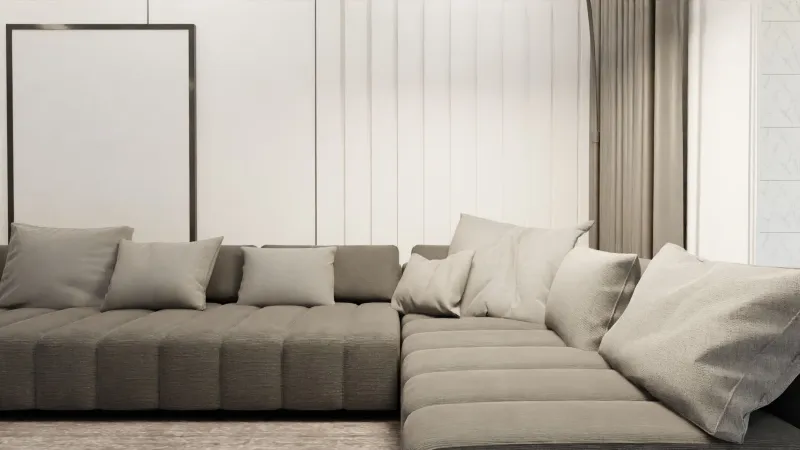
Photo by Photo by POOJAN THANEKAR on Unsplash on Unsplash
You've probably rearranged a room and felt the shift — that subtle but undeniable sense that something works better now, that you breathe a little easier, that you're somehow more yourself in the space. What you were feeling wasn't imagination. It was your nervous system responding to environmental cues in ways that science is only beginning to fully map.
The relationship between furniture layout and human cognition is one of the more fascinating frontiers in environmental psychology — and the findings have surprisingly practical implications for how you design your home.
The Brain Is Always Reading the Room
Your brain doesn't stop processing your environment when you consciously stop paying attention to it. Visual cortex activity, spatial awareness, and threat-detection systems run continuously in the background, responding to everything from ceiling height to the position of your desk relative to the door.
Dr. Sally Augustin, an environmental psychologist and author widely cited in the field of design psychology, has written extensively about how spatial configurations trigger specific neurological responses. Rooms that feel "safe" — those that offer a clear view of entry points while positioning occupants with their backs to a solid wall — activate lower levels of ambient cortisol, the stress hormone that, when chronically elevated, impairs memory, concentration, and emotional regulation.
This isn't abstract theory. It's the reason you feel inexplicably on edge working at a desk that faces a wall, or why certain restaurant seating arrangements make you feel exposed and uncomfortable. Your ancient threat-assessment hardware is running an evaluation you never consciously requested.
The Productivity Layout
If you work from home — and millions of Americans now do, at least part-time — the arrangement of your workspace is doing more to determine your output than any productivity app or morning routine.
The single most impactful change most people can make? Repositioning a desk to face the room rather than a wall, while keeping a solid surface (a wall or bookcase) behind them. This configuration satisfies what researchers call "prospect and refuge" theory: the neurological preference for spaces that offer a broad view (prospect) while providing a sense of protected backing (refuge).
Beyond that foundational principle, a few arrangement strategies consistently show up in the research:
Minimize visual clutter in your sightline. The prefrontal cortex — the part of your brain responsible for focus and executive function — is easily overtaxed by visual noise. Shelving units, storage ottomans, and media consoles with closed storage keep the visual field cleaner and reduce the low-level cognitive load that drains concentration over the course of a workday.
Keep work zones and rest zones physically separated. In studio apartments and small homes, this is genuinely challenging, but even a partial visual boundary — a bookcase used as a divider, a strategically placed area rug — can help your brain distinguish between "work mode" and "rest mode" spaces. This distinction matters more than most people realize.
Consider the path from your front door. Research on "decompression zones" suggests that having a clear transitional area near the entry — even just a small bench and a place to put your bag — helps the brain shift from the vigilance of public space to the lower-alert state of home. Cluttered entryways with nowhere to land your attention disrupt this transition.
Furniture, Light, and Your Sleep
Circadian rhythm disruption is one of the most underappreciated health crises in modern American life. And while screen time gets most of the blame, furniture arrangement plays a supporting role that often goes unexamined.
The position of your bed relative to natural light sources significantly influences your body's ability to regulate melatonin production. Waking to direct sunlight — especially eastern exposure — triggers cortisol release that naturally energizes the body and sets the biological clock. Beds positioned to block this light, or in rooms where blackout curtains make morning light unavailable, can subtly disrupt the timing of that hormonal cascade.
Beyond light, the spatial psychology of the bedroom matters for sleep quality in more subtle ways. Beds positioned so that sleepers can see the bedroom door from a lying position consistently rate higher in comfort surveys — again, that prospect-and-refuge principle at work. Furniture arrangements that feel "exposed" or that position the bed against a wall with limited access on one side can trigger low-level vigilance responses that fragment sleep architecture.
"We often think of bedroom design purely in terms of aesthetics," notes one New York-based interior designer who specializes in wellness-focused residential projects. "But the spatial relationships — where the bed sits, what you see when you open your eyes, how easy it is to move through the room — all of that is communicating something to your nervous system, whether you're aware of it or not."
The Living Room and Emotional Regulation
The living room is where most American households do the messy, important work of connecting — with partners, kids, friends, and themselves. Its arrangement either facilitates or inhibits that connection in ways that are measurable.
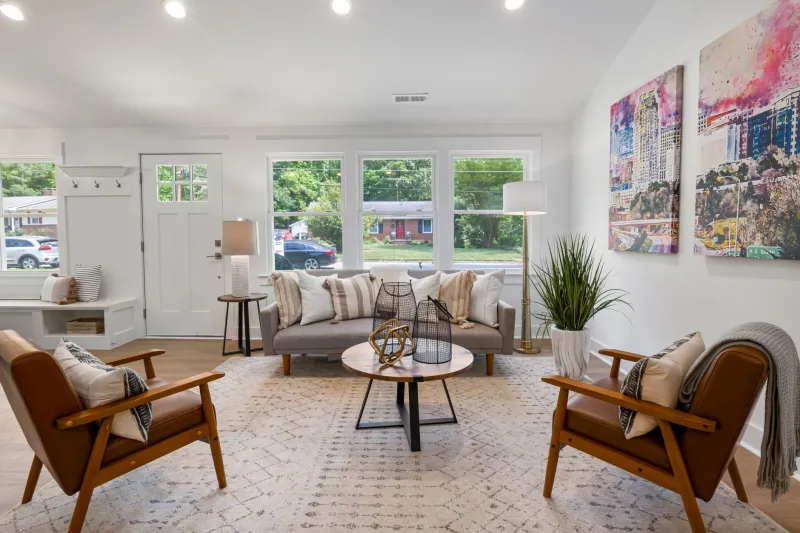
Furniture arrangements that face all seating toward a television create what researchers call a "parallel attention" environment — everyone's looking at the same thing, which is great for movie nights and terrible for conversation. Layouts that position seating to face each other, even partially, consistently produce higher rates of spontaneous conversation and longer social interaction times.
For households managing anxiety or stress, the living room layout can also either amplify or dampen emotional dysregulation. Spaces with clear pathways — no furniture blocking natural movement routes — reduce a subtle but real sense of physical constraint that can heighten agitation. Rounded furniture edges, soft textiles, and warm lighting all contribute to what environmental psychologists call "restorative environments" — spaces that actively help the nervous system downregulate.
A Framework You Can Actually Use
You don't need a design degree or a neuroscience background to apply these principles. Start with three questions:
-
What do I need this room to do for me? Identify the primary function — focus, rest, connection, decompression — and arrange furniture to serve that function first, aesthetics second.
-
Can I see the entry from my primary position? Whether it's your desk chair, your sofa, or your bed, positioning yourself with a view of the door and a solid backing reduces ambient stress in ways you'll feel within days.
-
What does my eye land on first? The first thing you see when you enter a room or wake up in the morning sets a neurological tone for the hours that follow. Make it intentional.
Your furniture isn't just filling space. It's shaping the quality of your attention, the depth of your sleep, and the ease with which you move through your own life. That's worth arranging carefully.