Your Home Is Talking to Your Brain — Here's What Minimalist Design Is Saying
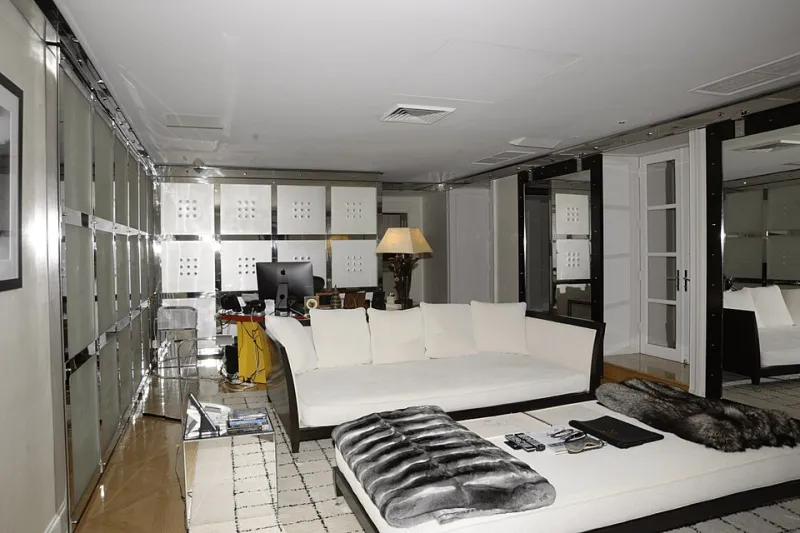
Photo: Federal Bureau of Investigation, Public domain, via Wikimedia Commons
Walk into a room crammed with mismatched furniture, stacked magazines, and surfaces fighting for visual attention, and something happens almost immediately — your shoulders tense up. Now walk into a space with clean lines, breathing room between pieces, and a deliberate color palette. You exhale. You didn't choose either reaction consciously. Your brain made that call for you.
That involuntary response is at the heart of a growing body of research connecting our physical environments to our psychological well-being. And it's one big reason why contemporary minimalist design has moved from niche aesthetic into something closer to a lifestyle philosophy for millions of American households.
What the Research Actually Says
Psychologists and neuroscientists have spent years studying how visual clutter affects cognitive function, and the findings are pretty consistent: too much stuff stresses us out. A landmark study from UCLA's Center on Everyday Lives and Families found that women who described their homes as cluttered had measurably higher levels of cortisol — the body's primary stress hormone — throughout the day. The effect was stronger at home than at work, which is significant given how much of our emotional recovery is supposed to happen in our living spaces.
Dr. Layla Okonkwo, an interior psychologist based in Chicago who consults with both residential clients and commercial developers, explains it this way: "Our brains are constantly processing sensory input. When you're surrounded by visual noise — too many objects, competing patterns, surfaces without clear purpose — your nervous system is working overtime just to make sense of the room. Minimalist design essentially gives your brain permission to rest."
That cognitive rest translates into real-world benefits. People who work from home in streamlined, intentional spaces report higher concentration levels. Families with cleaner common areas describe fewer arguments about the house feeling overwhelming. And sleep quality — particularly in bedrooms — improves significantly when visual stimulation is reduced before bed.
The American Shift Away from More-Is-More
For decades, American home décor culture celebrated abundance. Bigger was better, collections were status symbols, and a fully loaded mantle meant a full life. But something shifted — and it wasn't just Marie Kondo, though she certainly accelerated the conversation.
The 2008 financial crisis forced a lot of households to reconsider what they actually needed. The rise of smaller urban apartments in cities like New York, Los Angeles, and Austin made intentional purchasing a practical necessity. And then the pandemic hit, trapping millions of Americans inside homes they suddenly had to evaluate with fresh, unforgiving eyes.
"I looked around my living room in April 2020 and felt genuinely claustrophobic," says Marcus Delgado, a 38-year-old project manager from Denver who has since redesigned his home around contemporary minimalist principles. "I had three different side tables, furniture pushed against every wall, stuff on every shelf. I couldn't think straight. I spent that summer selling half of it and replacing the rest with pieces that actually had a reason to be there."
Marcus isn't alone. Google search trends for terms like "minimalist living room" and "modern furniture layout" spiked sharply in 2020 and have remained elevated. The contemporary design market responded — and furniture makers producing clean-lined, multifunctional pieces have seen sustained demand ever since.
How Modern Furniture Design Participates in This
Minimalism isn't just about removing things — it's about choosing the right things. Contemporary furniture design plays a direct role here, and it does so through several intentional principles.
Form follows function. Modern furniture tends to eliminate decorative excess in favor of purposeful design. A sleek, low-profile sofa with tight upholstery and tapered legs doesn't just look cleaner — it reduces the visual weight in a room, making the space feel larger and more breathable.
Neutral and tonal palettes. Contemporary interiors frequently lean into whites, warm grays, soft greiges, and earthy tones. These aren't boring choices — they're psychologically strategic ones. Neutral environments allow the brain to settle, while pops of intentional color (a terracotta throw, a deep navy accent chair) provide stimulation without overwhelm.
Negative space as a design element. This is perhaps the most counterintuitive concept for people raised on maximalism: the empty areas of a room are doing work. They create visual pause, direct the eye, and make the pieces that are present feel more deliberate and significant.
"When I help clients transition to a more minimalist approach, the furniture choices are almost secondary to the editing process," says Okonkwo. "We talk about what stays before we talk about what comes in. The furniture that works best in these spaces tends to be contemporary — it's designed with restraint already built in."
Real Spaces, Real Results
Beyond the research, the anecdotal evidence is compelling. Take Priya Nair, a 44-year-old teacher from the Atlanta suburbs who spent years accumulating furniture across multiple decorating phases — farmhouse, bohemian, transitional. After working with an interior stylist to pare down and rebuild around a contemporary framework, she describes her home as "finally feeling like mine."
"My anxiety was genuinely better within a few weeks of living in the new space," she says. "I know that sounds dramatic, but I think I underestimated how much the visual chaos was affecting me every single day. Now when I walk in the door, I feel calm instead of immediately overwhelmed by a to-do list of stuff to deal with."
Her redesign centered on a streamlined sectional in a warm oatmeal fabric, a simple live-edge coffee table, and open shelving with curated — not crammed — displays. No side tables she didn't need. No art hung just to fill wall space.
Getting There Without Going Cold
One of the most common fears about minimalist design is that it will feel sterile or impersonal — like a hotel lobby rather than a home. But contemporary minimalism done well is warm, textured, and deeply personal. The key is intentionality over austerity.
Layer in natural materials: wood, linen, stone, and woven textiles add warmth and sensory richness without visual clutter. Choose furniture with interesting but restrained details — a subtle curve on a chair back, the grain of a solid wood dining table, the weight of a quality fabric. Let your few decorative objects actually mean something.
The goal isn't emptiness. It's clarity. And according to both the science and the people living it, that clarity has a way of working its way from your walls into your head.
Your home is always communicating with your nervous system. Minimalist design just makes sure it's saying something worth hearing.