Whose Home Is This, Anyway? Breaking Free from Furniture Choices You Never Actually Wanted

Let's do a quick thought experiment. Walk through your home — mentally or literally — and pick out three pieces of furniture. Now ask yourself, honestly: did you buy each one because you wanted it, or because some version of who you thought you should be wanted it?
For a lot of people, that question lands a little uncomfortably. Because the truth is, plenty of us are living in homes that were designed for a hypothetical person — a tidier, more sophisticated, more adult version of ourselves that we thought we'd become by now. Or worse, we're living in homes that were designed to impress specific people: a parent, a partner's family, a social circle we were trying to fit into.
That's furniture guilt. And it's more common than anyone talks about.
Where Furniture Guilt Actually Comes From
Furniture guilt doesn't usually announce itself. It tends to show up quietly, as a vague sense that your home doesn't quite fit — like wearing shoes that are almost the right size. You can function in them, but something is always slightly off.
The roots are almost always social. We absorb ideas about what a home is supposed to look like from an early age — from how we grew up, from media, from the homes of people we admire or want to impress. And when we finally get our own spaces, we often default to those absorbed templates rather than asking what we actually want.
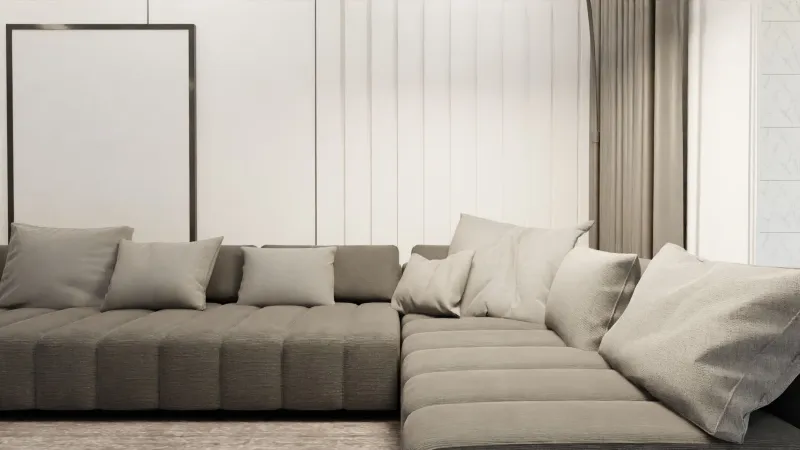
The midcentury modern sofa that you bought because it seemed like the sophisticated choice, but you've never once sat on it comfortably. The formal dining table that seats eight in an apartment where you eat alone most nights. The all-white linen everything that looked stunning on the design blog and sends you into low-grade anxiety every time someone comes over with red wine.
These aren't design failures. They're purchases made from obligation, aspiration, or anxiety rather than genuine preference — and they create homes that feel like sets rather than sanctuaries.
The Approval Trap
One of the sneakiest forms of furniture guilt is buying for an audience. Not a literal audience, but the imagined one that lives in the back of our minds — the mother-in-law who notices everything, the college friend whose apartment always looks like a magazine spread, the guests at the dinner party you're planning to host someday.
When we furnish for that imaginary audience, we tend to make choices that photograph well and impress on first glance but don't actually serve the way we live. We buy the sleek, minimal coffee table that has nowhere to put a drink. We skip the comfortable reading chair because it "doesn't go." We choose the statement piece over the useful one, every single time.
The approval trap also shows up in the other direction — as rebellion. Some people over-correct away from what they think they're supposed to want so aggressively that they end up in a home that doesn't reflect them either. Rejecting your parents' traditional aesthetic wholesale doesn't automatically mean your ultra-industrial loft setup is actually you. It might just be a different kind of performance.
Getting Honest About What You Actually Want
Breaking the cycle starts with some genuinely uncomfortable self-interrogation. Here are a few frameworks that help:
Follow the comfort, not the compliment. Think about the spaces where you've felt most at ease — a friend's home, a hotel room, a coffee shop you return to constantly. What do those places have in common? That's a more reliable signal than anything you've saved on Pinterest.
Notice what you actually use. Your furniture behavior tells you more than your stated preferences. If you always end up on the floor with a pillow against the sofa instead of sitting on it, your sofa is probably not right for how you live. If you eat every meal at the kitchen island and the dining table has become a staging area for mail, you might not actually need a formal dining setup.
Ask who you're dressing the room for. When you imagine buying a piece, picture who you're imagining seeing it. If the first person who comes to mind isn't you, that's worth pausing on.
Give yourself permission to like what you like. This sounds almost embarrassingly simple, but it's harder than it sounds. If you love maximalist color and pattern but have been living in a muted, neutral space because you thought it was more "mature" or "sophisticated" — that's furniture guilt talking. Your actual preferences are valid design choices.
What Intentional Buying Actually Looks Like
Furniture bought with intention doesn't have to be expensive or rare or particularly impressive. It just has to be honest. A piece chosen because it fits your actual life — the way you sit, the light in your apartment, the chaos or calm of your daily routine — will always feel better than a piece chosen to signal something to someone else.
Intentional buying also means giving yourself time before purchasing. The impulse buy driven by a flash sale or a sudden burst of home-improvement energy is almost always the purchase you'll regret. When you slow down enough to ask why you want something — and really sit with the answer — you tend to make choices that stick.
It also means being willing to live with the imperfect. A home that genuinely reflects you probably won't look like a showroom. It might have mismatched chairs because you love each one individually. It might have a worn-in sofa that your guests would never describe as stylish but that you've never once wanted to get up from. That's not a design failure. That's a home.
The Home You Actually Deserve
Here's the thing about furniture guilt: it's fixable. Not by buying more, or buying better, or finally getting the room right — but by getting honest about what right even means for you.
Your home doesn't owe anyone a performance. It owes you a place to land at the end of the day that feels like yours. That's a completely achievable thing, and it starts with a single, simple question: is this for me, or is this for someone else?
The answer will tell you everything you need to know.