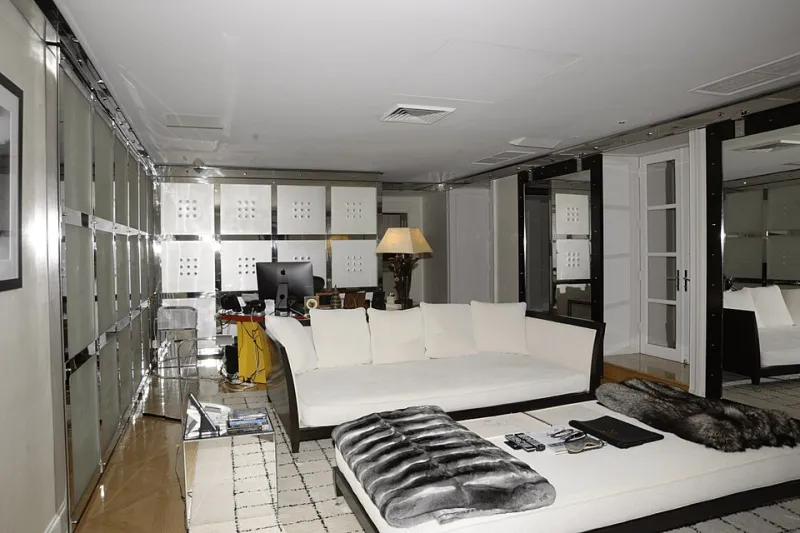
Own Less Furniture, Gain More Room: The Design Math That Actually Works

Photo by Photo by Francesca Tosolini on Unsplash on Unsplash
Here's a thought that might make you pause mid-scroll: the fastest way to make your apartment feel bigger isn't to move somewhere with more square footage. It's to remove a chair. Maybe two. Possibly that side table you've been stepping around for three years.
It sounds backwards, but the design world has known this secret for decades. Contemporary interiors that feel open, airy, and genuinely luxurious almost always have one thing in common — they're not stuffed with stuff. And the bonus? Fewer, better pieces often cost less over time than a room full of impulse buys fighting each other for visual dominance.
Let's break down why this works, and more importantly, how you can apply it in your own home without it feeling sparse or unfinished.
The Science Behind Empty Space (Yes, There Actually Is Some)
Negative space — the breathing room between and around objects — isn't just an aesthetic preference. It has measurable psychological effects. Research in environmental psychology consistently shows that cluttered environments elevate cortisol levels, the stress hormone, while open, orderly spaces promote a sense of calm and cognitive ease.
Your brain is constantly processing visual information. When a room is packed with furniture, your eyes have nowhere to rest. You might not consciously notice it, but that low-grade visual noise adds up. It's the design equivalent of trying to have a conversation in a noisy restaurant.
Minimalist and contemporary designers lean into this deliberately. By leaving portions of a floor plan intentionally empty, they create what architects call "visual rest points" — areas that allow the eye (and the mind) to pause. The result isn't emptiness. It's spaciousness, which feels completely different.
Real Room Transformations: What Actually Changes
Picture a standard American living room: sofa, loveseat, coffee table, two end tables, an accent chair, a media console, and a bookshelf. That's seven pieces of furniture competing for maybe 300 square feet. Every pathway feels negotiated. The room has a layout, sure, but it doesn't have a feeling.
Now imagine pulling the loveseat out entirely, replacing the two end tables with a single sculptural side table, and swapping the bulky media console for a wall-mounted floating shelf. Suddenly there's a clear sightline from the front door to the window. The sofa becomes a statement. The room has a center of gravity.
This isn't hypothetical — interior designers across the country are doing exactly this for clients who feel stuck with spaces that don't work. The transformation rarely requires a renovation. It usually requires a trip to the donation center.
The Multi-Functional Piece: Your New Best Friend
The counterpart to removing furniture is choosing smarter furniture. Contemporary design has gotten remarkably good at this. Today's market is full of pieces engineered to do two, three, or even four jobs at once — and they tend to look better than their single-purpose predecessors.
A few worth knowing about:
Storage ottomans that replace a coffee table, a storage bench, and extra seating all at once. Brands like West Elm and CB2 have solid options in the $300–$600 range that look genuinely intentional rather than practical-by-necessity.
Extendable dining tables that live as a compact two-seater on a Tuesday and expand to seat eight for Thanksgiving. If you're in a smaller home or apartment, this single swap can eliminate the need for a separate dining room setup entirely.
Sofa beds with clean lines — not the clunky pull-out of your childhood memories, but genuinely attractive pieces with memory foam mattresses and contemporary silhouettes. A guest room becomes a home office. A home office becomes a guest room. One piece, zero compromise.
Bed frames with integrated storage drawers eliminate the need for a separate dresser in smaller bedrooms, freeing up floor space that makes the entire room read as larger.
The math here is real: one well-chosen multi-functional piece at $800 replacing three mediocre single-purpose pieces at $200 each isn't a splurge. It's a net savings of $400 and a dramatically cleaner room.
How to Audit Your Space Without Losing Your Mind
You don't need to hire a designer or commit to a full weekend overhaul. Start with a simple exercise: stand in the doorway of your most-used room and take a photo. Then look at the photo, not the room itself. The camera flattens the space and makes visual clutter immediately obvious in a way your brain, which fills in gaps with familiarity, often doesn't.
Ask yourself a few honest questions:
- Can you walk through the room in a straight line without adjusting your path?
- Is there at least one wall or corner that has nothing against it?
- Does every piece of furniture earn its square footage, either through daily use or genuine visual purpose?
If the answer to any of these is no, you've found your starting point. The goal isn't a room that looks like a furniture showroom — it's a room that feels like it has room to breathe.
Spending Less by Buying Better
There's a cultural script in American home design that equates fullness with comfort and abundance. More pillows, more throws, more accent pieces, more furniture. But contemporary design pushes back on that script pretty firmly, and for good reason.
When you stop buying filler furniture — the pieces that exist because a corner felt empty, not because you actually needed them — your budget consolidates around fewer, higher-quality investments. A $1,200 sofa that anchors a clean, considered room will always outperform a $600 sofa surrounded by $200 worth of things that don't quite go with it.
The paradox is genuinely true: owning less furniture can mean spending less money, living in more space, and feeling more at home. That's not a design trend. It's just good math.