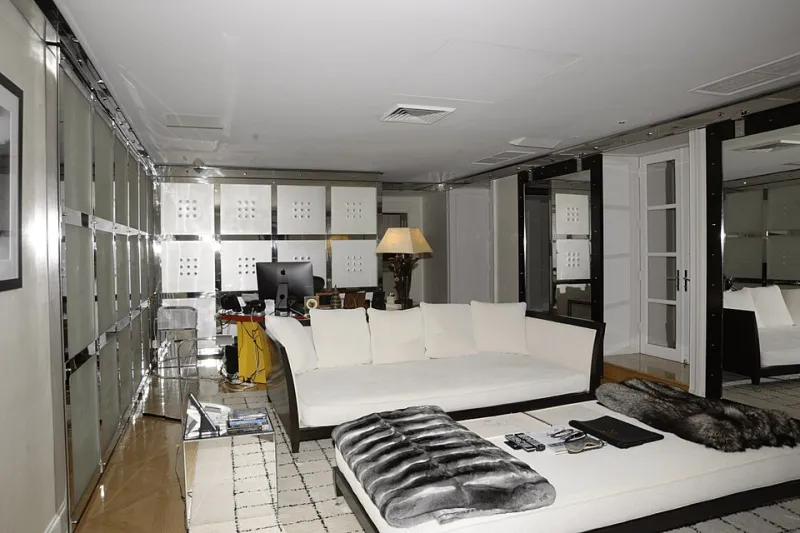
Curated, Not Cluttered: Designing a Personality-Packed Space When Square Footage Is Scarce

Photo by Photo by Aleksandra Dementeva on Unsplash on Unsplash
There's a version of contemporary design that gets a bad rap — all white walls, empty surfaces, and furniture so minimal it looks like the owner just moved in and hasn't unpacked yet. If that's your thing, great. But for a lot of us, "contemporary" doesn't mean cold or impersonal. It means clean, intentional, and — when done right — full of life.
The challenge is figuring out how to inject warmth, color, and personality into a small apartment or condo without tipping over into chaos. That line between curated and cluttered can feel razor-thin in 600 square feet. But interior designers who work with compact urban spaces say the answer isn't about doing less — it's about doing smarter.
Start With Spatial Psychology, Not a Shopping Cart
Before you move a single piece of furniture, it helps to understand how your brain processes a room. Our perception of space is heavily influenced by visual weight, sightlines, and the relationship between objects — not just raw square footage.
A room full of low-profile furniture with exposed legs, for example, reads as more open than the same room packed with pieces that sit heavy on the floor. Light bounces differently off matte surfaces versus glossy ones. A single large area rug can make a room feel more expansive than several smaller ones fighting for territory.
This is why professional designers talk so much about "editing." It's not about owning fewer things — it's about being strategic with what earns a spot in your space. Every piece should either serve a clear function, bring genuine visual joy, or ideally both.
The Statement Piece Principle
One of the most effective tools for small-space design is the deliberate statement piece — a single item that commands attention and sets the tone for everything around it. In contemporary interiors, this might be a sculptural accent chair in a bold fabric, an oversized piece of wall art, or a dining table with an unexpected material finish.
The key is to let that piece breathe. Surround it with simpler, quieter elements that support rather than compete. Think of it like a conversation: if everyone in the room is talking at full volume, nothing gets heard. But one strong voice in a room of attentive listeners? That lands.
For smaller apartments, designers often recommend placing your statement piece at the natural focal point of the room — the wall you see first when you walk in, or the spot that anchors the seating area. From there, build outward with restraint.
Layering Texture Without Visual Noise
Texture is one of the most underused tools in contemporary design, and it's particularly powerful in small spaces because it adds depth and interest without taking up physical room. A linen throw on a clean-lined sofa, a jute rug under a glass coffee table, a ceramic vase with a matte finish next to a glossy lamp — these contrasts create richness without clutter.
The trick is to vary your textures while keeping your color palette relatively cohesive. If your sofa is a warm oatmeal linen, your rug might be a deeper taupe with a woven texture, and your throw could be a chunky knit in a similar warm tone. The colors relate to each other; the textures create the visual complexity that makes the room feel layered rather than flat.
"People are afraid of texture because they think it means busy," explains one New York-based interior stylist who specializes in small-footprint apartments. "But texture without pattern is almost always a safe bet. It adds so much life to a contemporary space without fighting with your clean lines."
Color Strategy for Compact Rooms
Contemporary design has a complicated relationship with color. The stereotype says keep it neutral, but the reality is more nuanced. In small spaces, a well-placed hit of color can actually make a room feel larger and more dynamic — as long as you're intentional about where it lands.
Accent walls have fallen somewhat out of fashion in contemporary interiors, replaced by a more integrated approach: color that flows through the room in controlled doses. A deep navy velvet cushion, a terracotta side table, a warm sage green plant pot — these aren't accent walls, they're moments. They give the eye somewhere interesting to land without overwhelming the senses.
If you're nervous about color, start with your textiles and accessories. These are the easiest things to change if you decide you've gone too far in one direction. Once you've lived with a color for a few weeks and decided you love it, you can commit to something more permanent.
Furniture That Works Twice as Hard
In small spaces, multifunctionality isn't just a nice-to-have — it's a design philosophy. Contemporary furniture design has gotten remarkably sophisticated in this area. Storage ottomans that double as coffee tables, dining tables with built-in shelving, modular sofas that reconfigure for different uses — these pieces solve real problems without sacrificing the clean aesthetic that defines modern living.
When shopping for multipurpose furniture, resist the urge to go purely practical. The piece still needs to look good. A clunky storage bench that serves its function but drags down the room visually isn't actually doing you any favors. The best contemporary pieces solve functional problems while looking like they were designed for beauty first.
The Edit Is Never Finished
Here's something designers don't always say out loud: the best small spaces are never truly "done." They evolve. A piece gets moved, something gets donated, a new find gets introduced. The goal isn't to achieve a perfect static arrangement — it's to develop your eye for what's working and what isn't.
Living in a small space well is an ongoing practice. It asks you to be honest about what you actually use, what genuinely brings you pleasure, and what's just taking up room out of habit or guilt. Contemporary design, at its best, supports that kind of clarity.
Your space doesn't need more square footage to feel extraordinary. It just needs the right edit.