Move It Around: The No-Purchase Room Refresh That Might Actually Change How You Live
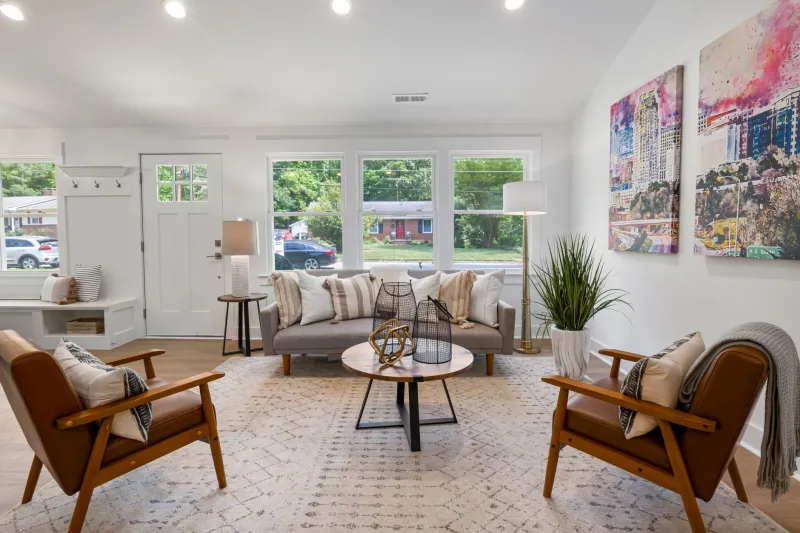
At some point, most of us have stood in a room we live in every day and felt vaguely dissatisfied without being able to name exactly why. The furniture is fine. The pieces are ones you like. But something about the space feels off — too cramped, too formal, too scattered, or just weirdly lifeless.
Before you open a browser tab and start adding things to a cart, consider this: the problem might not be what you own. It might be where you've put it.
Furniture arrangement is one of the most powerful and least talked-about tools in interior design. Repositioning what you already have can shift a room's energy, improve how it functions, make it feel larger or more intimate, and even affect how you feel when you're in it. It's the design equivalent of a haircut — same person, completely different vibe.
Why Layout Matters More Than Most People Think
Here's something interior designers know that most homeowners don't fully internalize: the eye reads a room's layout before it registers individual pieces. The spatial logic — where things are in relation to each other, how traffic flows, where the visual weight lands — creates an immediate subconscious impression that shapes everything else.
This is why two identical sofas can feel completely different depending on where they're placed. Against a wall, a sofa can feel stuck, flat, almost furniture-showroom-ish. Float it a foot or two into the room, and suddenly the space has depth. The sofa reads as intentional rather than parked.
The psychology behind this is well-documented. Humans are wired to read spatial arrangements as social cues. Furniture that faces inward, toward a central point, signals conversation and connection. Furniture arranged in a linear pattern along walls signals waiting rooms and lobbies — which is exactly the vibe most of us are trying to avoid in our living rooms.
Once you understand that layout communicates something before anyone says a word, rearranging starts to feel less like moving heavy objects and more like editing a sentence until it finally says what you meant.
The Anchor-First Approach
If you're going to rearrange a room, start with the anchor — the largest, heaviest piece that everything else will orient around. In a living room, that's usually the sofa. In a bedroom, the bed. In a dining space, the table.
The most common mistake people make is placing the anchor against the most obvious wall without questioning whether that's actually the best spot. Ask yourself: what is this room's focal point? It might be a fireplace, a large window, an architectural feature, or even a piece of art. The anchor piece should face or frame that focal point — not because a design rule says so, but because it creates visual logic that makes the room feel resolved.
Once your anchor is placed, layer secondary pieces around it in a way that defines a clear zone. In a living room, that means pulling chairs and side tables into a conversational cluster rather than scattering them toward the walls. In a bedroom, it might mean flanking the bed with matching nightstands to create symmetry that reads as calm and intentional.
Traffic Flow Is a Design Element
One of the fastest ways to make a room feel frustrating to be in — without knowing exactly why — is to block natural traffic pathways. If you have to navigate around a coffee table corner every time you cross the room, your body registers that friction even when your brain doesn't consciously clock it.
A good rule of thumb: main traffic pathways should have at least 36 inches of clearance, and the space between a sofa and a coffee table should be roughly 18 inches — close enough to reach your drink without leaning, far enough to move around without bumping shins.
When you're mapping out a rearrangement, literally walk the paths you use most. Where do you enter? Where do you go? What do you need to get to regularly? Design the layout around those movements rather than forcing your behavior to accommodate the furniture.
Small Rooms, Big Moves
For renters and anyone working with limited square footage — which is a lot of us in US cities — furniture arrangement isn't just aesthetic. It's functional survival.
The instinct in a small room is to push everything against the walls to "open up" the center. This almost always backfires. It creates a wide, empty middle that feels awkward and makes the perimeter feel chaotic. Floating furniture slightly away from walls and grouping pieces closer together actually makes a room feel more purposeful and, paradoxically, larger — because it creates defined zones with breathing room between them rather than a single undifferentiated space.
Angling a piece of furniture — a chair at 45 degrees, a desk pulled diagonally into a corner — is another move that adds visual dynamism to a small room without adding any square footage. It breaks the boxy predictability of most apartment layouts and signals that someone made a deliberate choice, which is the essence of good design.
In studio apartments or open-plan spaces, furniture placement is also your primary tool for creating the illusion of separate rooms. A sofa with its back to the kitchen defines a living area. A rug anchors a dining zone. A bookshelf or open console can function as a room divider without blocking light. You don't need walls — you need intentional placement.
The Lighting Shift You're Not Thinking About
Here's a rearrangement move that most people overlook entirely: when you reposition furniture, reposition your lamps.
Overhead lighting is the enemy of atmosphere. Most US apartments and homes are lit primarily from above, which flattens everything and makes rooms feel clinical. Lamps placed at eye level — on side tables, on the floor, on shelves — create warmth, depth, and that elusive quality people describe as "cozy" or "inviting."
When you rearrange a room, take stock of where your light sources are and whether they're doing the right jobs. A floor lamp moved to a dark corner can make that corner feel like a destination rather than dead space. A table lamp repositioned next to a chair turns it into a reading nook. Light placement and furniture placement are inseparable — change one and you often need to revisit the other.
Give It 48 Hours Before You Judge It
Here's the thing about rearranging: your first reaction is almost always wrong. A new layout can feel strange and uncomfortable simply because it's unfamiliar, and the brain tends to interpret unfamiliar as wrong. Give any new arrangement at least 48 hours before you decide whether it's working.
Live in it. Sit in the chairs. Walk the paths. Eat at the table. Have a conversation on the sofa. The test of a good layout isn't how it looks in a photo — it's how it feels to actually inhabit it over a couple of days.
You might find that the arrangement you were skeptical about is actually the best the room has ever felt. Or you'll have better information about what to adjust next. Either way, you've done real design work — and you haven't spent a dollar to do it.
Your furniture is more flexible than you think. The room you want might already be in the room you have.


