No Lease? No Problem: The Modern Renter's Guide to a Seriously Stylish Home

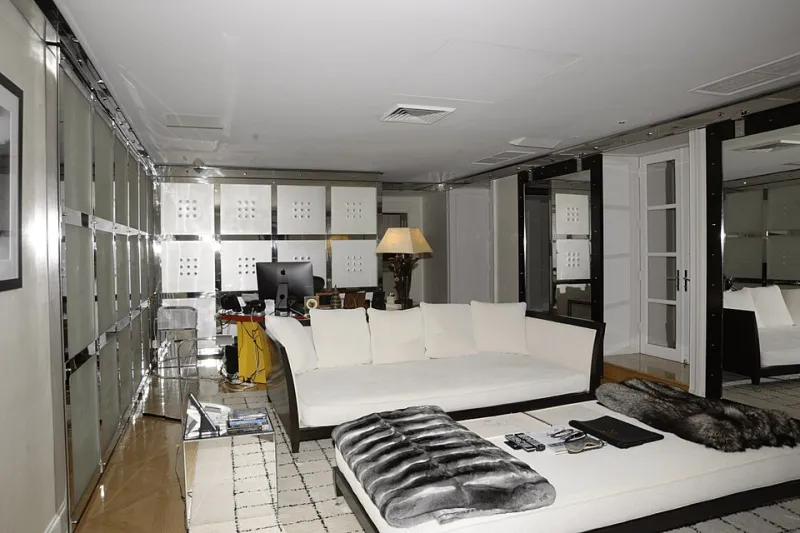
Photo by Photo by Lotus Design N Print on Unsplash on Unsplash
Let's be honest about the renter's dilemma. You scroll through design accounts, you save inspiration images, you have a genuine vision for how you want to live — and then you look around at your apartment with its landlord-beige walls, its mystery carpet, and its light fixtures that look like they were chosen specifically to be forgotten, and the gap between dream and reality feels enormous.
Here's the thing: that gap is closing fast. And the people closing it are renters themselves — particularly millennials and Gen Z adults who have decided, consciously or otherwise, to stop treating their living spaces as temporary holding patterns and start treating them as actual homes worth investing in.
The design industry noticed. And it responded.
The Renter Mindset Shift That Changed Everything
For a long time, the dominant cultural narrative around renting was that it was a transitional phase — a stepping stone on the way to the "real" milestone of homeownership. Furniture choices reflected that attitude. Why invest in a great sofa if you're just going to move in two years?
But that story has gotten a lot more complicated. Homeownership rates among younger Americans have shifted dramatically due to economic pressure, geographic flexibility, and changing lifestyle priorities. A significant portion of the population is renting not because they're waiting for something better, but because renting is the plan — at least for now, and maybe for a long time.
That shift in mindset is driving a parallel shift in how people approach renting a space. "I stopped thinking of my apartment as temporary," says Jordan, a 29-year-old graphic designer who has rented in Seattle and now Denver. "It's my actual home. I live there. I deserve to feel good in it."
That attitude — practical, self-aware, and design-forward — is exactly what the contemporary furniture market has started building for.
What Rental-Friendly Actually Means
When designers and furniture brands talk about "rental-friendly" design, they're describing a specific set of constraints. No permanent modifications — no drilling into walls beyond what's already there, no painting without permission, no built-ins. Pieces need to be movable, because leases end and apartments change. And ideally, everything should be able to transition to a completely different floor plan without losing its utility.
Those constraints, interestingly, push toward some of the most compelling contemporary design principles.
Modularity is the big one. Sectional sofas with reconfigurable components, shelving systems that can be rearranged and expanded, bed frames that disassemble cleanly — these are all design-forward solutions that also happen to be perfect for renters. Brands like Floyd, Burrow, and Maiden Home have built significant followings specifically because their products were designed with mobility and flexibility in mind from the start.
Scale awareness is another. Renters often work with smaller footprints, and contemporary design's emphasis on proportion and negative space is genuinely useful here. A well-chosen sofa that fits a space, rather than the largest one that technically fits, makes a room feel intentional rather than stuffed.
Surface-based decoration becomes the primary creative tool when walls are off-limits. Rugs, textiles, freestanding shelving, floor lamps, and plants do the heavy lifting that paint and wallpaper would do in an owned home. The good news is that these elements are often more impactful than people expect — and they move with you.
The Rental Furniture Industry Is Actually Getting Good
Beyond buying furniture to own, there's a growing market for renting furniture itself — and it's evolved well past the institutional, laminate-heavy offerings that gave the category a bad reputation.
Companies like Fernish, Feather, and CORT have repositioned themselves around design-conscious renters who want quality contemporary pieces without the upfront cost or the logistical headache of moving heavy furniture across state lines. Their catalogs now feature sofas with real upholstery, solid wood dining tables, and bed frames with actual visual presence — pieces that wouldn't look out of place in a thoughtfully designed owned home.
The model makes particular sense for people in transitional situations: corporate relocations, short-term assignments, post-grad moves to expensive cities where spending $3,000 on a sofa feels like a lot when you don't know if you'll be there in 18 months. Rent the sofa, keep the flexibility, and redirect that capital elsewhere.
Gen Z, in particular, seems drawn to the model — not just for financial reasons, but because it aligns with a broader preference for access over ownership that shows up across categories from streaming to transportation.
Building a Cohesive Look Without Permanent Infrastructure
Here's the practical part. How do you actually make a rental apartment feel like a designed space rather than a furnished box?
Start with the rug. In a space where you can't touch the floors, a rug is transformational. It defines zones, adds warmth, and anchors furniture groupings in a way that makes a room feel intentional. Go bigger than you think you need — a rug that's too small makes a space feel unfinished.
Invest in one statement piece. Renters sometimes make the mistake of spreading their budget thin across many mediocre items. A single genuinely great piece — a beautiful sofa, a distinctive dining table, a real leather chair — elevates everything around it and gives the space a focal point.
Use freestanding shelving as architecture. A floor-to-ceiling bookshelf or a well-styled open shelving unit does what built-ins do in owned homes: it gives the room vertical interest and makes the space feel customized. Brands like IKEA's KALLAX system and String Furniture's modular shelving are perennial favorites for exactly this reason.
Layer lighting. Overhead lighting in rental apartments is almost universally depressing. Floor lamps, table lamps, and even plug-in sconces (which require no wiring) can completely change the atmosphere of a space. This is one of the highest-impact, lowest-commitment upgrades a renter can make.
Treat textiles as your palette. Since you can't paint, your throw pillows, curtains, and blankets are doing a lot of color work. Choose them with the same intentionality you'd bring to a paint selection — consider the undertones, think about how they interact with each other, and don't be afraid to switch them out seasonally.
The Wellness Angle Nobody Talks About
There's a real connection between how your home looks and feels and how you actually feel living in it. That's not woo — it's well-documented in environmental psychology research. Spaces that feel chaotic, impersonal, or neglected contribute to stress and a diminished sense of agency. Spaces that feel intentional and personally meaningful do the opposite.
For renters, who are already navigating the particular stress of not fully controlling their environment, creating a space that genuinely reflects their aesthetic and values isn't a luxury — it's a form of self-care. Choosing furniture and décor that you actually love, even if you're only going to be in that apartment for two years, is an investment in your daily experience of being alive in that space.
You don't need to own the walls to own the room. You just need to approach it like it matters — because it does.