Where You Put Your Sofa Is Messing With Your Head (And Your Work)
Most of us have rearranged furniture at least once in our lives and felt that weird, inexplicable lift afterward — like something clicked into place that had nothing to do with the actual chair. Turns out, that feeling isn't just in your head. Or rather, it is exactly in your head, and that's the whole point.
Spatial psychology — the study of how physical environments affect human behavior and emotion — has been quietly influencing architects and interior designers for decades. But now, as more Americans work from home full-time and blur the lines between living and professional spaces, the stakes of furniture placement have never been higher. Where you put things matters. A lot.
Your Brain Reads the Room Before You Do
Here's something worth sitting with: your nervous system processes your physical environment before your conscious mind does. The moment you walk into a room, your brain is already cataloging sight lines, calculating open space, registering the position of furniture in relation to doors and windows, and making micro-decisions about whether you feel safe, focused, or scattered.
This is why a cluttered, poorly arranged room doesn't just look bad — it actually increases cortisol levels, the hormone associated with stress. Conversely, research from environmental psychology suggests that rooms with clear pathways, balanced proportions, and intentional focal points tend to lower anxiety and improve cognitive performance.
So when you're setting up a home office or creative studio, you're not just decorating. You're essentially programming your daily mental state.
The Desk Dilemma: Command Position and Why It Changes Everything
If you work from home and your desk faces a wall — or worse, faces away from the room's entrance — you may be unknowingly triggering a low-grade stress response for hours every day.
Interior designers often reference the concept of the "command position," borrowed from traditional Feng Shui but increasingly validated by behavioral science. The idea is simple: place your primary work surface so you can see the door without being directly in line with it. This gives your brain a sense of control over the environment, reducing the subconscious vigilance that kicks in when you can't see what's coming.
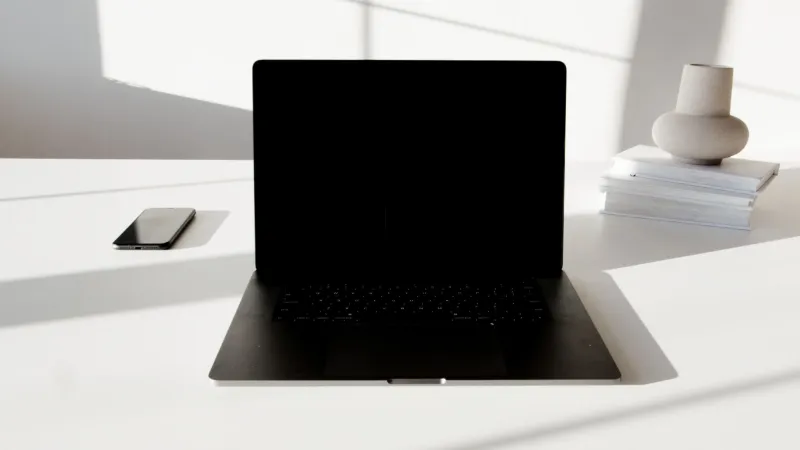
Contemporary desks with clean lines and minimal visual noise — think matte-finish surfaces, integrated cable management, and open legs rather than bulky pedestals — amplify this effect by keeping your field of vision unobstructed. A desk that looks calm tends to help you feel calm.
Zones Matter More Than Square Footage
One of the most persistent myths in home design is that you need a lot of space to have a functional, mood-supporting layout. You don't. What you need is intentional zoning — the practice of using furniture to create distinct psychological territories within a single room.
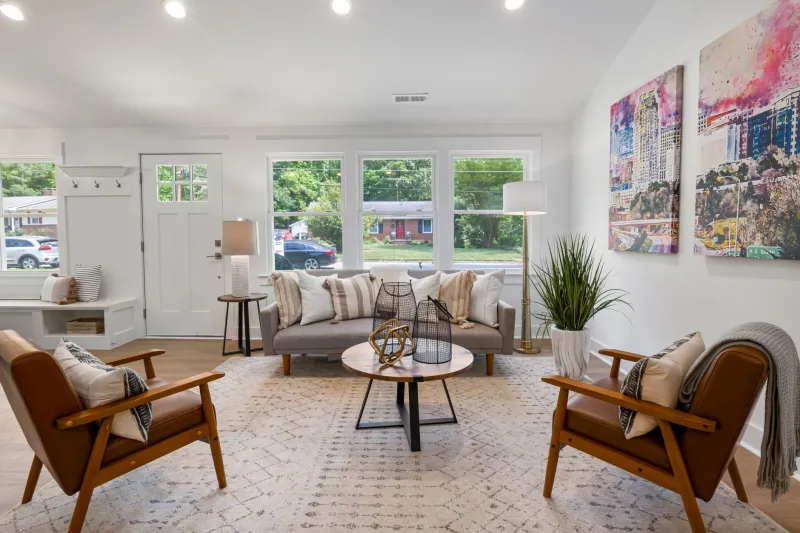
In a studio apartment or a dual-purpose room, a well-placed sofa with its back to the workspace creates a visual and psychological boundary between "work mode" and "rest mode." A slim console table, a bookshelf used as a divider, or even a carefully positioned area rug can signal to your brain that you've crossed from one mental zone into another.
This is especially useful for creative professionals — writers, designers, musicians — who often struggle with the mental transition between focused work and genuine downtime. When your space physically marks that transition, your brain follows.
Natural Light Is a Productivity Tool, Not Just a Vibe
Where your furniture sits in relation to windows isn't just an aesthetic decision — it's a circadian one. Natural light regulates your body's internal clock, and working in a space that gets consistent daylight (without harsh glare on your screen) has been shown to improve sleep quality, alertness, and even mood stability throughout the day.
The practical move: position your primary seating and work areas to receive indirect natural light, ideally from the side rather than directly behind or in front of you. Use furniture with reflective or light-toned surfaces — pale wood, white lacquer, warm linen upholstery — to bounce that light deeper into the room without creating contrast fatigue.
If your layout doesn't allow for ideal window proximity, layered artificial lighting becomes essential. Floor lamps positioned behind a reading chair, task lighting at desk level, and ambient overhead sources at different heights mimic the gradations of natural light and keep your brain from flattening into that dull, fluorescent-office haze.
The Living Room Trap: When Comfort Kills Creativity
Here's a counterintuitive one: if your creative work setup is too comfortable, it might be working against you. Deeply cushioned sofas, reclining chairs, and ultra-soft seating trigger your parasympathetic nervous system — the "rest and digest" mode that's great for winding down but terrible for generating ideas or sustaining focus.
Contemporary design has actually solved this problem beautifully. The current wave of modern furniture favors structured seating with supportive backs, clean geometric forms, and materials like molded foam and tensioned fabric that offer comfort without collapse. A well-designed accent chair with a firm seat and an upright silhouette can become your best creative partner — keeping you alert while still looking like it belongs in an editorial photoshoot.
Save the deep-sink sectional for the Netflix end of your day. Your work deserves a chair that works as hard as you do.
Small Shifts, Big Returns
You don't need to gut your entire space to feel the difference. Some of the most impactful changes are genuinely small:
- Rotate your desk 90 degrees so you're no longer facing a blank wall.
- Pull furniture away from walls by even six to twelve inches — rooms instantly feel more intentional and less like a waiting room.
- Add a single piece of vertical interest — a tall bookshelf, a floor lamp, an architectural plant — to draw the eye upward and make ceilings feel higher.
- Create one clear pathway through your main work area, free of bags, cables, or stray furniture legs.
None of these require a budget. All of them require attention. And that attention — that deliberate relationship with your physical space — is exactly what separates a room you live in from a room that actually supports the life you're trying to build.