The Pieces That Stay: How the Furniture You Choose Becomes a Map of Who You've Been
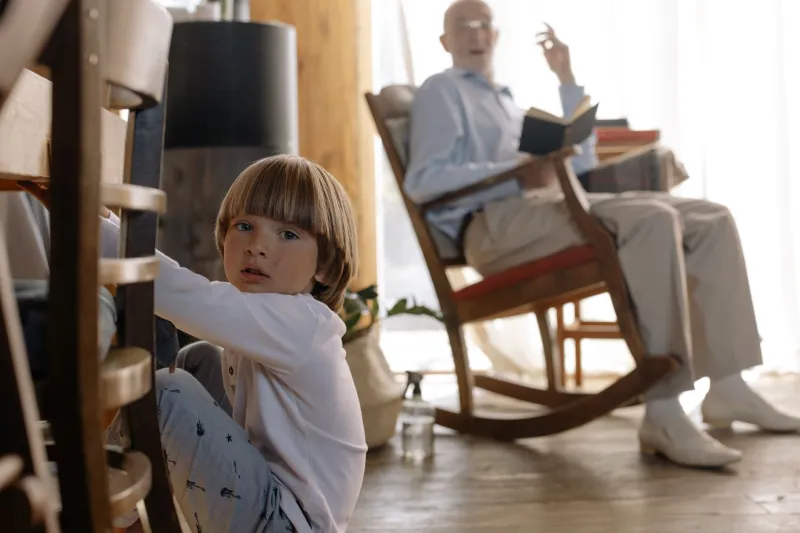
There's a chair in my parents' house — a low, wide armchair in a faded olive fabric that nobody would describe as stylish by any contemporary measure — that has survived four decades, two house moves, one complete living room renovation, and approximately 10,000 Sunday afternoons. My father reads in it. His father sat in it before him. It is, by most metrics, an unremarkable piece of furniture. And yet no one has ever seriously suggested getting rid of it.
That chair is not decorating the room. It's anchoring it.
Most of us, if we're being honest, have at least one piece like that — something that's survived longer than it probably should have because its value isn't really about the fabric or the finish. It's about time. It's about the life that happened in and around it.
This is what furniture, at its most meaningful, actually does. Not just fill space. Mark time.
The First Apartment: When Everything Is a Placeholder (Except the Things That Aren't)
Most people furnish their first real home in one of two modes: total improvisation (whatever fits, whatever's cheap, whatever someone's parents were getting rid of) or careful aspiration (a few pieces chosen with the conviction that this is finally the start of a real aesthetic).
Both approaches produce furniture that tells a story in retrospect. The wobbly Craigslist bookshelf becomes a memory of a specific kind of freedom — slightly chaotic, full of possibility, not yet weighted down by expectation. The one genuinely good piece you saved up for — the solid wood dining table, the well-made leather chair — becomes the thing you keep carrying forward through every subsequent move, the through-line that connects who you were then to who you are now.
What's interesting about that first apartment stage is that the furniture you choose under genuine financial constraint often turns out to be more durable emotionally than the stuff you buy when you have more resources. Scarcity forces intention. When you can only have a few things, you choose the ones that actually matter.
Designers have a word for this: editing. The first apartment, for all its limitations, is often the most ruthlessly edited space you'll ever live in — and there's something clarifying about that.
The Building Years: When Your Home Has to Work Harder Than You Do
Somewhere between the first apartment and whatever comes next — a bigger place, a partner moving in, a baby, a dog, a home office, sometimes all of the above within a few years — furniture stops being about expression and starts being about function.
This is the season when the beautiful but impractical gets quietly retired. The cream-colored sofa that survived your twenties doesn't survive the first year of toddlerhood. The glass coffee table goes into storage the moment a small person starts pulling themselves upright on its edges. The open shelving you loved for its gallery-wall energy becomes a liability when there are small hands involved.
But something else happens in this season too: you start to understand what durability actually means. Not just physical durability — though that matters enormously — but emotional durability. The pieces that earn their place in a growing, chaotic, fully-lived-in home are the ones that can absorb life without looking depleted by it. A solid hardwood dining table that shows the marks of a thousand family dinners isn't damaged. It's documented.
This is the moment when the contemporary furniture market's obsession with quality materials starts to make complete practical sense. Buying well once — really well, from a maker who cares about what goes into the piece — is almost always cheaper than replacing twice. But more than the economics, there's something about a piece that holds up that earns a different kind of trust. You stop looking at it as furniture and start looking at it as furniture that's on your side.
The Quiet Recalibration: When Rooms Get to Breathe Again
At some point — maybe when the kids leave, maybe when a relationship ends, maybe just when the particular season of maximum density finally passes — rooms get to breathe again. And this is when people often do some of the most interesting and emotionally honest decorating of their lives.
The empty nest isn't just a parenting milestone. It's a design opportunity. Suddenly you have space you haven't had in years, and the question of how to use it becomes strangely personal. Do you fill it back up? Streamline? Finally buy the piece you've wanted for fifteen years but couldn't justify?
Many people in this stage report a pull toward fewer, better things — a kind of instinctive minimalism that doesn't feel like deprivation but like relief. The room doesn't need to do as much anymore. It doesn't need to accommodate chaos or multitask across six different functions. It can just be a room. A beautiful one, ideally, that reflects something true about who you've become rather than what you've needed to manage.
The pieces that travel with you into this stage are the ones that earned it. They're not there because you haven't gotten around to replacing them. They're there because they've proven themselves across seasons you didn't know you'd survive when you bought them.
Choosing With the Future in Mind (Without Over-Planning It)
None of this means you should shop for furniture like you're buying a time capsule. Over-planning is its own trap — the room designed for the life you imagine having rather than the one you're actually living tends to feel performative rather than genuine.
But there's a middle ground between disposable furniture and furniture chosen with paralytic permanence in mind. It sounds like this:
Buy for quality over trend. Trends are fine for accessories, textiles, and pieces you expect to rotate. For anything structural — your sofa, your dining table, your bed frame — buy the best version you can afford in a design that doesn't depend on a particular moment in time to make sense.
Choose pieces with emotional staying power. This is harder to quantify but easier to feel. When you sit in a chair that's made well, in a shape that's genuinely comfortable, in a material that ages gracefully — you know. That's the piece that's still going to be in your life a decade from now.
Let your home be a record, not a performance. The scratch on the dining table from the year you moved in, the slight fading on the armchair by the window, the small repair on the bookshelf — these are not flaws. They're evidence of a life being lived. A home that looks lived-in is not a home that needs fixing.
Give yourself permission to change. Holding onto a piece because it holds meaning is different from holding onto it out of obligation. The goal isn't to turn your home into a museum of your past selves. It's to carry forward what still serves you — emotionally and practically — and let go of what doesn't.
The Map Your Rooms Make
Look around the room you're in right now. Chances are at least one piece in it has a story attached — something you remember choosing, or receiving, or moving across three states in the back of a rented truck. That piece is doing more than decorating your room. It's holding a chapter.
The best furniture isn't the most expensive or the most on-trend or even the most beautiful in isolation. It's the kind that can hold the weight of a life being lived in full — the ordinary Tuesday evenings, the milestone celebrations, the quiet moments nobody photographs. The kind that, years from now, someone might look at and decide isn't going anywhere.
That's what it means to build a home instead of just a room.